Why Backing Up Your macOS Folders to SFTP Is a Smart Move
If you already have access to an SSH-enabled server, SFTP is one of the cleanest ways to store offsite backups without adding another cloud vendor to the stack. Because SFTP runs over SSH, it gives you encrypted transport by design, and paired with OpenSSH and OurClone, it becomes a strong fit for secure Mac backups.
- 🔐 Encrypted Transport by Default -- Unlike plain FTP, SFTP runs through SSH, so credentials and file transfers are protected in transit. OurClone also encrypts repository data locally before upload, which gives you protection both in transit and at rest.
- 💸 Uses Existing Server Capacity -- SFTP usually comes from a VPS, dedicated server, NAS, or any Linux host with SSH access. That means the cost is determined by infrastructure you already rent or own rather than a separate storage vendor's pricing model.
- 💻 Great Fit for Technical and Small-Business Setups -- SFTP is widely available on Unix-like servers, hosting environments, and private infrastructure. If your team already manages SSH access, turning that into a Mac backup target is a natural next step.
- 📦 Flexible Repository Layout -- You can dedicate one SFTP directory per Mac, separate backups by client or project, or isolate archives on different server paths. That makes retention and restore planning much easier later.
- 🌍 Cross-Device Recovery -- Because SFTP access is portable across machines and tools, you can reconnect your repository in OurClone from another Mac and restore files if the original device is unavailable.
What Is Incremental Backup and Why Does It Matter?
A full backup every time becomes frustrating once you start protecting larger folders. Photo libraries, code repositories, exported assets, and project archives take too long to re-upload if only a few files changed.
Incremental backup solves that by sending only new or changed data after the first snapshot. Instead of repeatedly writing the same content to your SFTP server, later runs stay much lighter and faster.
OurClone supports incremental backups to SFTP, which is what makes this setup practical for ongoing use. SFTP gives you a secure server target, and OurClone keeps recurring backups efficient enough to run regularly from macOS.
- 🚀 Speeds up backup times by only syncing changed files
- 💾 Saves cloud storage space and bandwidth usage
- 🔐 Works with encrypted storage like SFTP for secure updates
- 📅 Allows versioning so you can access past edits when needed
What to Know Before You Start Backing Up
A little preparation makes your SFTP backup smoother to run and much easier to restore later.
- 📁 Pick the Right Folders -- Focus on folders with real recovery value, such as
~/Documents,~/Pictures, project workspaces, and exported deliverables. Skip system files, caches, and temporary folders. - 📶 Make Sure Your Internet Can Handle It -- The first upload to an SFTP server may be the heaviest part of the process, especially on slower upstream connections. Later incremental runs should be much lighter.
- 🔒 Don't Forget Security -- Use a strong password or, if supported in your workflow, dedicated SSH credentials restricted to the backup path. Store your OurClone repository password separately because you will need it for restores.
- 🧪 Start Small -- Test one smaller folder first so you can confirm the SFTP host, port, destination path, and restore flow before backing up larger archives.
- 📦 Know Your Backup Strategy -- The first backup is a full snapshot, while later ones are incremental. That keeps recurring backup time manageable while still preserving useful restore history.
How to Back Up macOS Folders to SFTP Using OurClone
OurClone keeps the setup simple. SFTP uses direct server credentials, so you'll prepare your host, username, password, and port first, then connect that secure storage destination inside the app.
Watch the SFTP backup tutorial on YouTube.
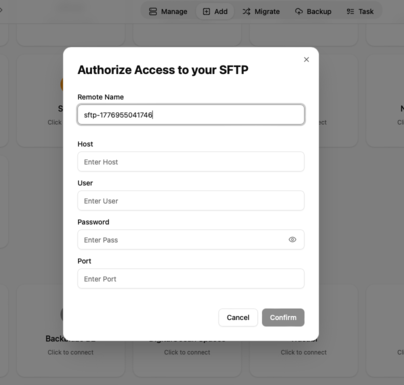
- 🔗 Connect via SFTP -- Open OurClone, go to the Add tab at the top and search for SFTP. Give the connection a name, then enter your server host, username, password, and port, which is usually
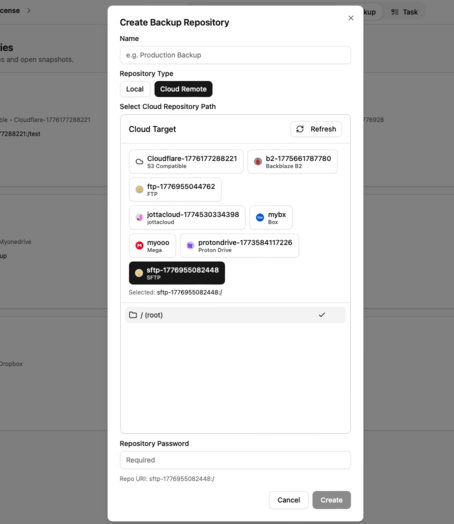
22. Click Confirm and the server appears under Manage, ready to hold encrypted backups. - 🗄️ Create a Backup Repository -- Go to the
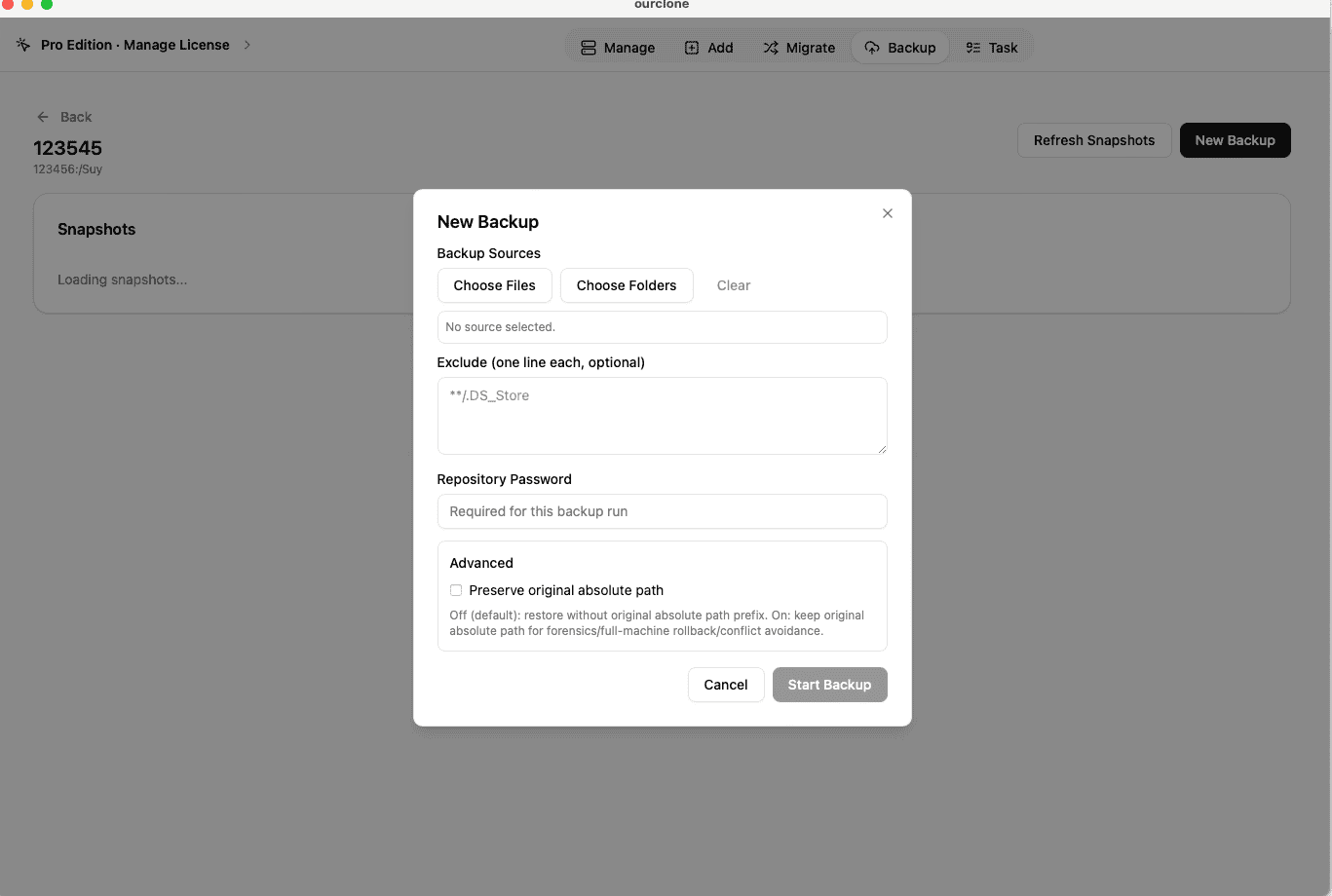
Backuptab and clickCreate Repository. Choose a destination path on your SFTP server like/macos-backup. Set a repository name and define your encryption password. This password is required to restore your files -- keep it safe. - 📁 Select Folders to Back Up -- Once your repository is ready, click
New Backupand select the local folders you want to protect. Whether it's~/Documents,~/Pictures, or folders on an external disk, OurClone will encrypt and send them securely to SFTP. - 📊 Track Backup Progress in Real Time -- Head over to the
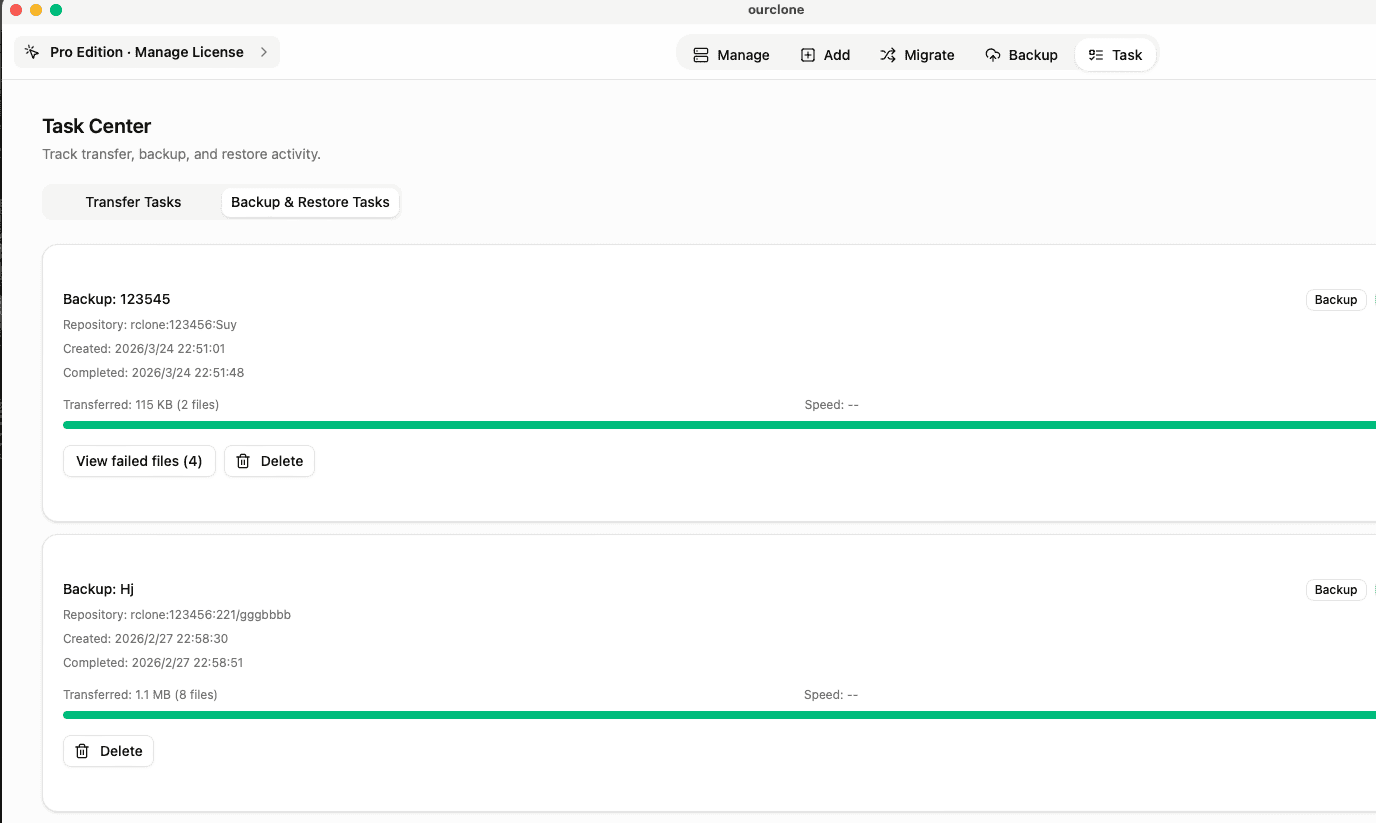
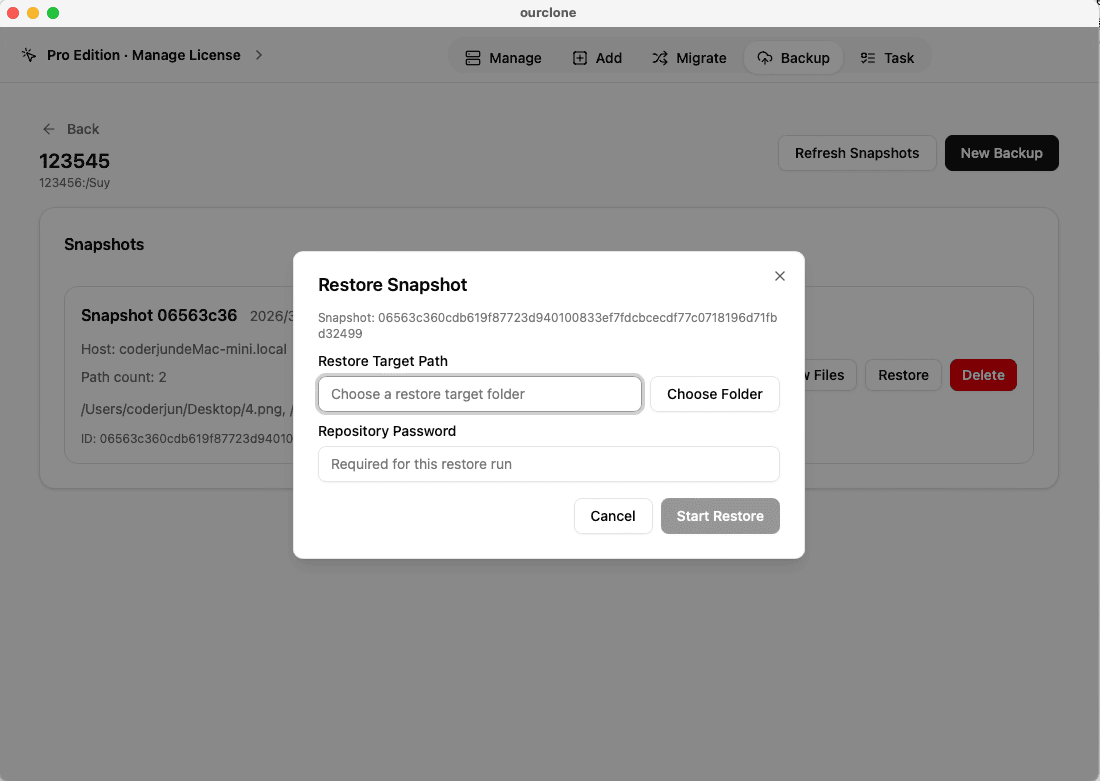
Tasktab and open Backups to follow the run until it shows Completed, then check that the new snapshot is listed in the repository. OurClone splits files into encrypted blocks and only uploads blocks the server doesn't already have, so later runs are much lighter than the first. To stop a run, use Cancel task and start it again later. - 🔄 Restore When Needed -- To recover data, open your repository and pick a snapshot. Click
Restoreon its row to bring back the whole snapshot, or useBrowse Filesto restore a single file or folder. Choose the folder to restore into (an empty one is safest), enter your repository password, and the files come back with their folder structure intact.
SFTP gives you a secure, widely available server destination, and OurClone adds the encrypted backup workflow that makes it practical for day-to-day Mac protection. The result is especially attractive when you already manage servers or want tighter control over where your backup data lives.
How to Confirm Your Backup in OurClone
Once the first backup finishes, verify it before you rely on it. A quick review makes sure your SFTP backup is genuinely recoverable and not just apparently complete.
- 📄 Check Task Completion -- Review the latest backup task in the
Tasksection. If it completed without warnings, that is a strong start. If uploads failed, OurClone will show the details clearly. - 🧩 Look for Partial Results -- Path mistakes, permissions problems, or files in use can cause skipped items. Catching those now is much easier than discovering them during a real restore.
- 📜 Read the Detailed Logs -- Open the task log to confirm which files were included, how much data moved, and whether the repository updated the way you expected.
- 🔐 Protect Your Restore Path -- Your SFTP server holding the backup is only one part of the recovery story. You still need the repository password to decrypt and restore those files later.
Regularly Check That Backups Are Still Running
Scheduled jobs still deserve occasional attention. Password changes, server permission updates, or full disks can interrupt future SFTP uploads even if the repository itself still exists.
Test a Restore Before You Need One
Restore one smaller folder to a temporary location and open a few files. That confirms your SFTP access, your repository password, and the integrity of your backup history before a real recovery becomes urgent.
Why SFTP Is Often Better Than FTP for Mac Backups
Many people searching for backup Mac to SFTP are really comparing protocol safety, not just setup steps. That is where SFTP stands out. Because it runs over SSH, it protects credentials and transfers in transit, which makes it a much safer default than plain FTP for internet-facing backup jobs.
SFTP is especially useful if you already have a VPS, a Linux server, a Synology or QNAP box with SSH access, or a host where secure shell access is part of your existing workflow. In those cases, using SFTP as your offsite target can be one of the cleanest ways to create an automatic SFTP backup on macOS without adding another storage vendor.
For users comparing FTP vs SFTP backup, the practical answer is simple: both can work with OurClone, but SFTP is usually the better fit when security matters and your infrastructure already supports SSH.
SFTP Backup FAQ
Can I back up a local folder to an SFTP server automatically?
Yes. Once your SFTP repository is created in OurClone, you can run recurring incremental backups so only changed data is uploaded after the first full snapshot.
Is SFTP secure enough for offsite Mac backup?
For many use cases, yes. SFTP encrypts traffic through SSH, and OurClone adds repository encryption before upload, so you get both encrypted transport and encrypted backup content.
What kind of server can I use for SFTP backups?
You can use a VPS, a dedicated server, a home server, a NAS with SSH access, or any host that exposes SFTP credentials and enough storage space for your backup repository.
Is SFTP better than cloud object storage for backup?
It depends on what you already have. SFTP is great when you want direct control over your server and already manage SSH-based infrastructure. Object storage is often better for very large scale, but SFTP can be simpler for smaller or self-managed environments.