Why Backing Up Your macOS Folders to Wasabi Is a Smart Move
Wasabi is built for hot cloud object storage, which makes it a great destination for offsite Mac backups. It gives you S3-compatible storage, predictable billing, and fast access, while OurClone adds the encrypted repository and restore workflow that turns raw storage into a real backup system.
- 🔐 Security Features for Teams and Individuals -- Wasabi supports server-side encryption along with IAM, MFA, and SSO features, while OurClone adds its own repository encryption before upload.
- 💸 Clear Pricing Model -- Wasabi Pay as You Go starts at $6.99 per TB per month and does not charge separate egress or API request fees, which helps keep backup bills easier to predict.
- 💻 Mac Backup Without Finder Lock-In -- Wasabi is not limited to a single sync-folder workflow, so OurClone can back up any folder you choose on macOS, including external-drive content.
- 📦 Flexible Repository Layout -- You can organize one Wasabi repository for personal files, another for work archives, or different repositories for different Macs depending on how you want restores to work.
- 🌍 Cross-Device Recovery -- Once your encrypted backup is in Wasabi, you can reconnect and restore it from another Mac through OurClone whenever you need access to older files.
What Is Incremental Backup and Why Does It Matter?
A full backup on every run sounds safe, but it quickly turns into wasted time. Large media folders, project archives, and photo libraries take too long to re-upload if only a small part changed.
Incremental backup fixes that by sending only changed files and blocks after the first snapshot. That means your routine backups stay much faster, even if the total amount of protected data keeps growing.
OurClone supports incremental backups to Wasabi, which is one of the main reasons this setup works so well. Wasabi gives you durable object storage, and OurClone makes it efficient enough to use as part of a regular Mac backup habit.
- 🚀 Speeds up backup times by only syncing changed files
- 💾 Saves cloud storage space and bandwidth usage
- 🔐 Works with encrypted storage like Wasabi for secure updates
- 📅 Allows versioning so you can access past edits when needed
What to Know Before You Start Backing Up
A little prep makes your Wasabi backup smoother and much easier to recover later.
- 📁 Pick the Right Folders -- Choose folders with real recovery value, such as
~/Documents,~/Pictures, and client project directories. Skip macOS system files and temporary folders that do not belong in cloud backup. - 📶 Make Sure Your Internet Can Handle It -- Your initial upload to Wasabi could be the heaviest one. A reliable upstream connection matters most at the beginning, while later incremental runs are much lighter.
- 🔒 Don't Forget Security -- Create a dedicated Wasabi access key for backups, turn on MFA for the account, and keep your OurClone repository password stored somewhere safe and separate.
- 🧪 Start Small -- Run a test backup of one smaller folder first so you can confirm your Wasabi credentials, bucket path, and restore flow before committing a large archive.
- 📦 Know Your Backup Strategy -- The first snapshot is a full upload, while later ones are incremental. That combination keeps your Wasabi usage predictable while still giving you regular restore points.
How to Back Up macOS Folders to Wasabi Using OurClone
OurClone keeps the workflow simple. Wasabi uses access keys, so you'll generate those in your Wasabi account first and then connect the storage backend inside the app.
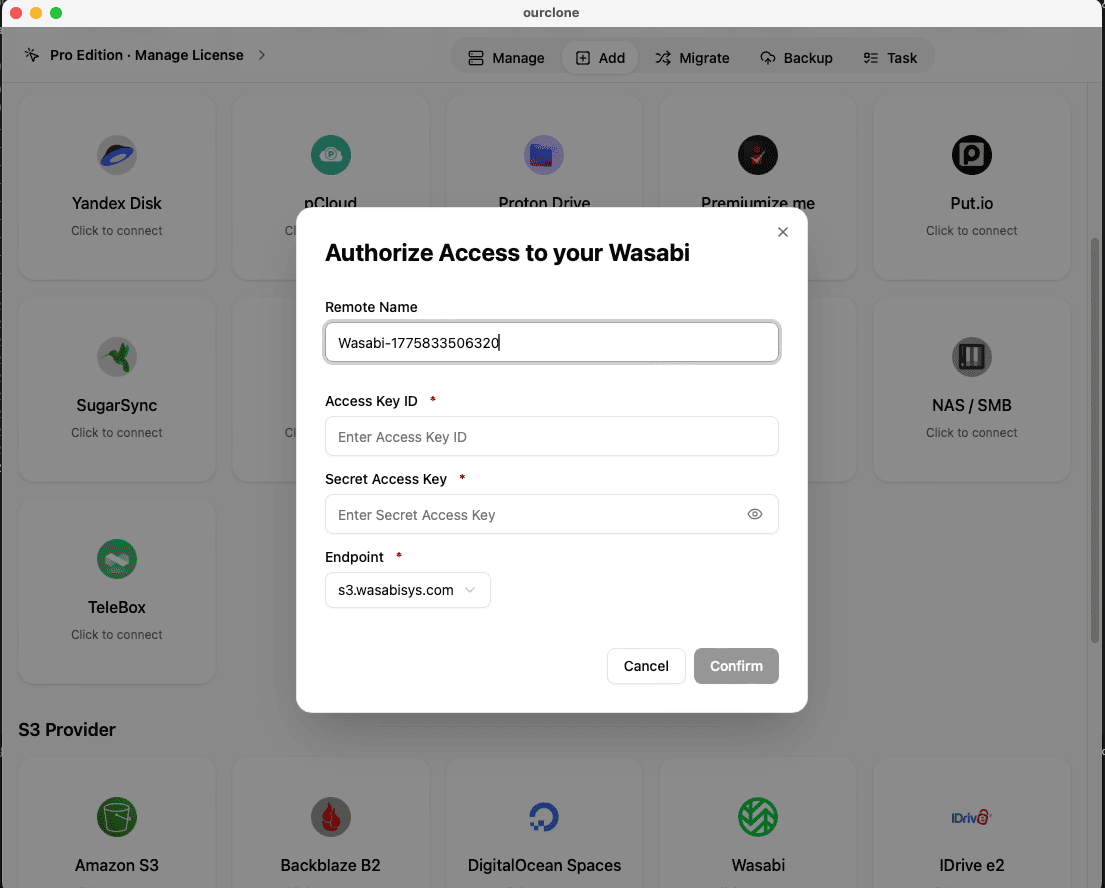
- 🔐 Connect to Wasabi via Access Keys -- Open OurClone and go to
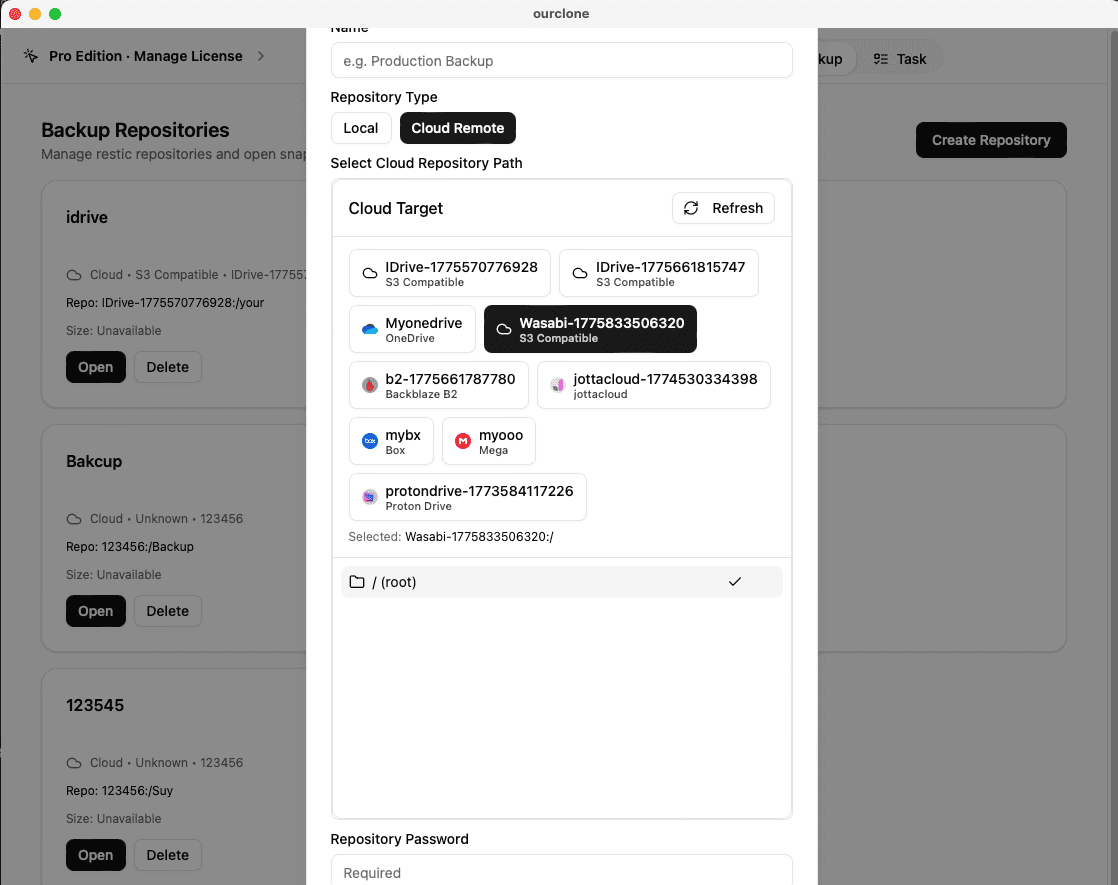
Add Storage. Select Wasabi. You'll need your Access Key ID and Secret Access Key, which you can create in the Wasabi console. Include the correct region or endpoint if needed. Once entered, OurClone will verify your credentials and Wasabi will appear as a connected storage backend. - 🗄️ Create a Backup Repository -- Go to the
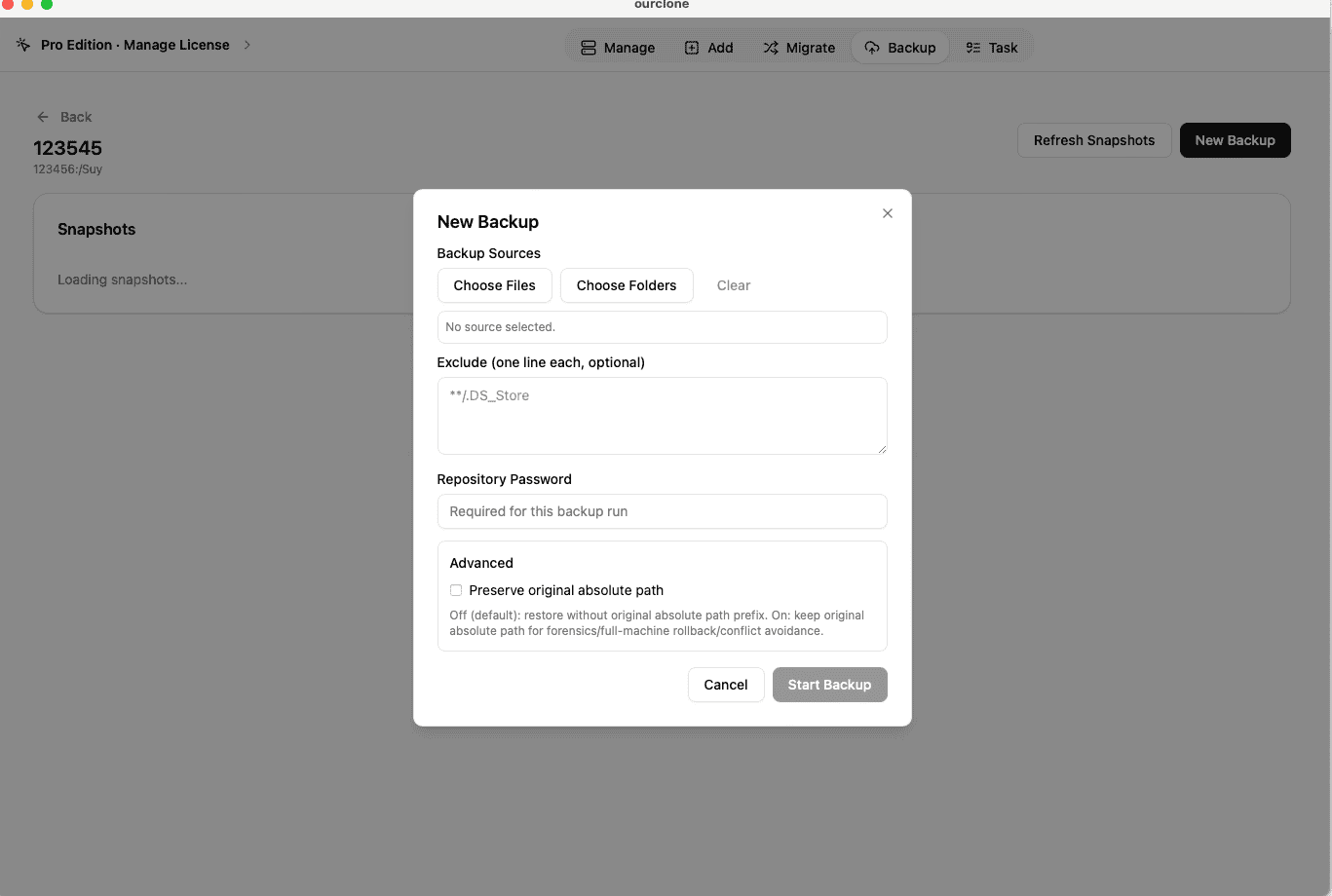
Backuptab and clickCreate Repository. Choose a destination path on Wasabi like/macos-backup. Set a repository name and define your encryption password. This password is required to restore your files -- keep it safe. - 📁 Select Folders to Back Up -- Once your repository is ready, click
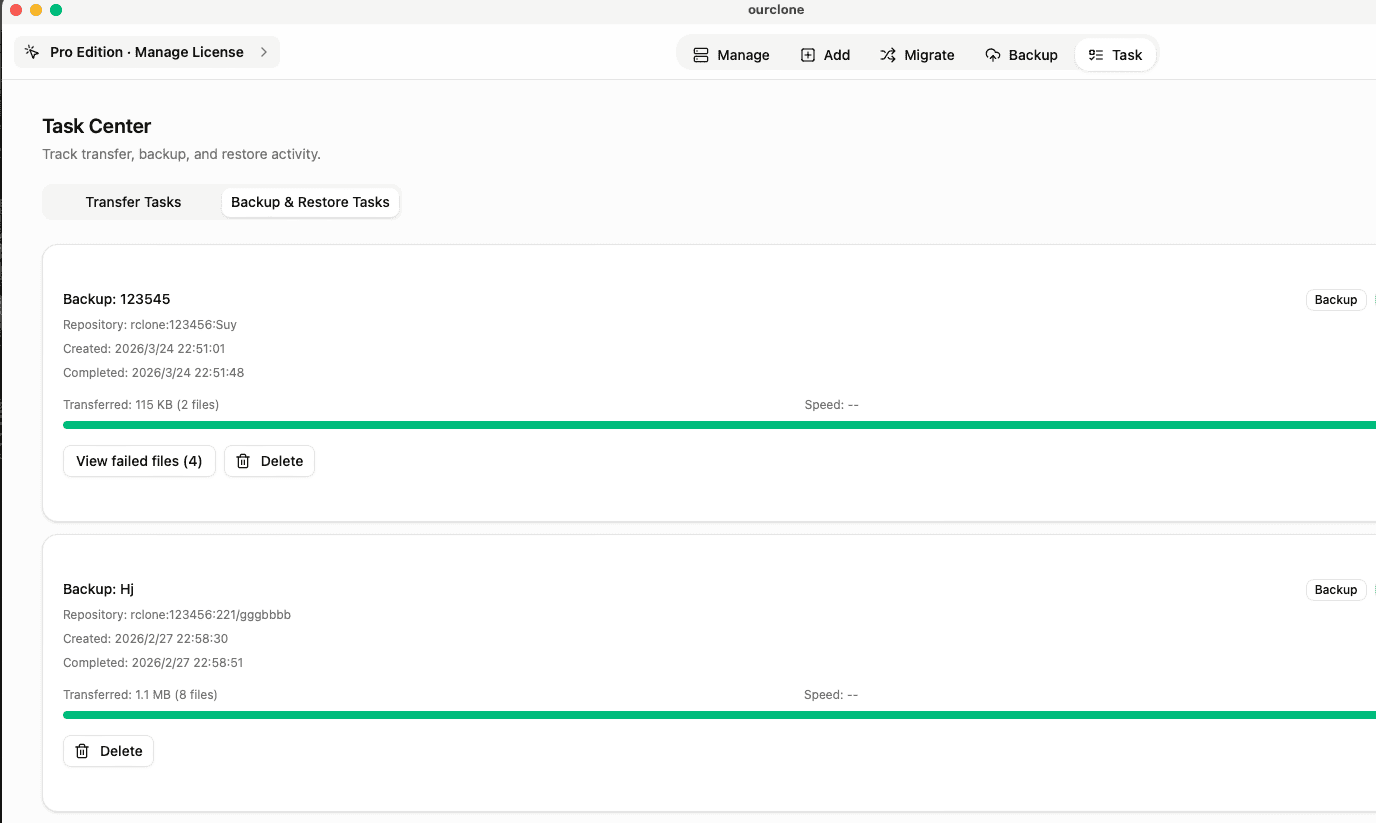
New Backupand select the local folders you want to protect. Whether it's~/Documents,~/Pictures, or folders on an external disk, OurClone will encrypt and send them securely to Wasabi. - 📊 Track Backup Progress in Real Time -- Head over to the
Tasktab to monitor your upload status. OurClone breaks files into blocks and uploads them efficiently -- even large backups can be paused and resumed without losing progress. - 🔄 Restore When Needed -- To recover data, open your repository, select a backup version, and click
Restore. After entering your encryption password, you can restore files to their original location or a new folder -- your directory structure stays intact.
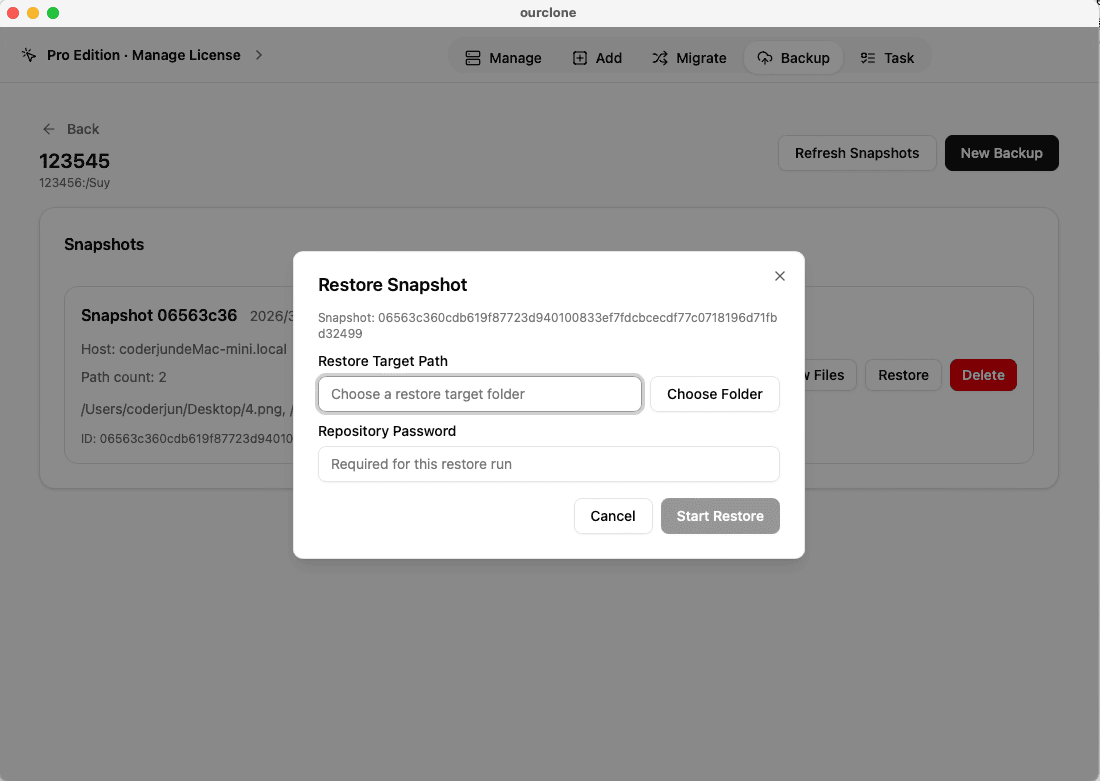
Wasabi provides the fast, predictable object storage layer, and OurClone provides the encrypted backup experience that makes it practical for day-to-day Mac protection. The result is a setup that feels powerful without being hard to maintain.
How to Confirm Your Backup in OurClone
Once the job finishes, verify it before you move on. A quick confirmation step makes sure your Wasabi backup is more than just a successful-looking progress bar.
- 📄 Check Task Completion -- Go to the
Tasksection and look underBackup Task. If the status shows completed without warnings, you're good. Errors or failed uploads will be flagged clearly. - 🧩 Review File Results -- If files were skipped (locked permissions, access errors), you'll see a notice in the task logs for immediate troubleshooting.
- 📜 Use the Detailed Logs -- Click into any backup task to view its full log with file paths, sizes, and upload status.
- 🔐 Encrypted Repository Checks -- OurClone encrypts all backup data before uploading. Verification ensures each encrypted block is stored properly and linked to the correct backup record.
Regularly Check That Backups Are Still Running
Scheduled jobs still need an occasional sanity check. In a Wasabi setup, rotated access keys, bucket policy changes, or an endpoint mismatch can interrupt uploads even if the repository itself is still fine.
Test a Restore -- Even If You Don't Need One Yet
Restore one small folder to a temporary path and open a few files. That proves your Wasabi credentials, your repository password, and the integrity of your backup snapshots before a real restore becomes urgent.