Why Backing Up Your macOS Folders to OpenDrive Is a Smart Move
If you want cloud backup with a simpler consumer-style pricing model, OpenDrive is worth considering. It combines backup and syncing features with desktop support, while OurClone adds encrypted repositories, incremental snapshots, and a restore flow that is easier to trust on macOS.
- 🔐 Encryption and Redundant Backup Features -- OpenDrive's paid personal plan includes file encryption, file versioning, and redundant backup. OurClone adds its own repository encryption before upload, which gives your backup data another protective layer.
- 💸 Simple Consumer Pricing -- OpenDrive offers a free plan with 5 GB of storage, then a personal paid plan listed at $12.95 per month or $129 per year with unlimited online storage, bandwidth, file size, and computer access. That makes the pricing story relatively easy to understand.
- 💻 Works Well for Mac Users -- OpenDrive offers a Mac app, but OurClone lets you back up any folder on your Mac instead of limiting you to whatever sits inside a sync setup. That is much better for real backup planning.
- 📦 Good for Personal Archives -- Because OpenDrive focuses on straightforward personal and small-team storage plans, it can work well for documents, photo libraries, and general offsite file protection without enterprise complexity.
- 🌍 Cross-Device Recovery -- Once your encrypted backup repository lives in OpenDrive, you can reconnect in OurClone from another Mac and restore the files you need without rebuilding the whole workflow.
What Is Incremental Backup and Why Does It Matter?
A full backup every time seems safe until your folders start getting large. Photo libraries, creative work, and project archives take too long to re-upload if only a small part changed.
Incremental backup fixes that by sending only changed files and blocks after the first snapshot. Instead of repeatedly writing the same content to OpenDrive, later backup runs stay much faster and lighter.
OurClone supports incremental backups to OpenDrive, which is what makes this setup practical over time. OpenDrive provides the storage target, and OurClone keeps recurring backups efficient enough to run regularly on your Mac.
- 🚀 Speeds up backup times by only syncing changed files
- 💾 Saves cloud storage space and bandwidth usage
- 🔐 Works with encrypted storage like OpenDrive for secure updates
- 📅 Allows versioning so you can access past edits when needed
What to Know Before You Start Backing Up
A little preparation makes your OpenDrive backup smoother to run and much easier to restore later.
- 📁 Pick the Right Folders -- Focus on the folders you would actually need after a failure, such as
~/Documents,~/Pictures, client deliverables, and project exports. Skip system files and temporary data. - 📶 Make Sure Your Internet Can Handle It -- The first upload to OpenDrive may be the largest one. Later incremental runs should be lighter, but the initial seed still benefits from a stable connection.
- 🔒 Don't Forget Security -- Use a strong account password, enable any extra account protections OpenDrive offers, and store your OurClone repository password separately because you will need it when restoring files.
- 🧪 Start Small -- Test one smaller folder first so you can confirm your OpenDrive credentials, destination path, and restore flow before backing up larger archives.
- 📦 Know Your Backup Strategy -- The first backup is a full snapshot, while future ones are incremental. That keeps the routine manageable without losing versioned restore points.
How to Back Up macOS Folders to OpenDrive Using OurClone
OurClone keeps the workflow straightforward. OpenDrive uses direct account credentials, so you'll sign in with your OpenDrive email and password first and then create your backup repository inside the app.
- 🔗 Add OpenDrive with Your Account Credentials -- Open OurClone and go to
Add Storage. Select OpenDrive from the list. Enter your OpenDrive email and password directly in OurClone. Once verified, OpenDrive will be added to your storage list and ready to use as a backup target. - 🗄️ Create a Backup Repository -- Go to the
Backuptab and clickCreate Repository. Choose a destination path on OpenDrive like/macos-backup. Set a repository name and define your encryption password. This password is required to restore your files -- keep it safe. - 📁 Select Folders to Back Up -- Once your repository is ready, click
New Backupand select the local folders you want to protect. Whether it's~/Documents,~/Pictures, or folders on an external disk, OurClone will encrypt and send them securely to OpenDrive. - 📊 Track Backup Progress in Real Time -- Head over to the
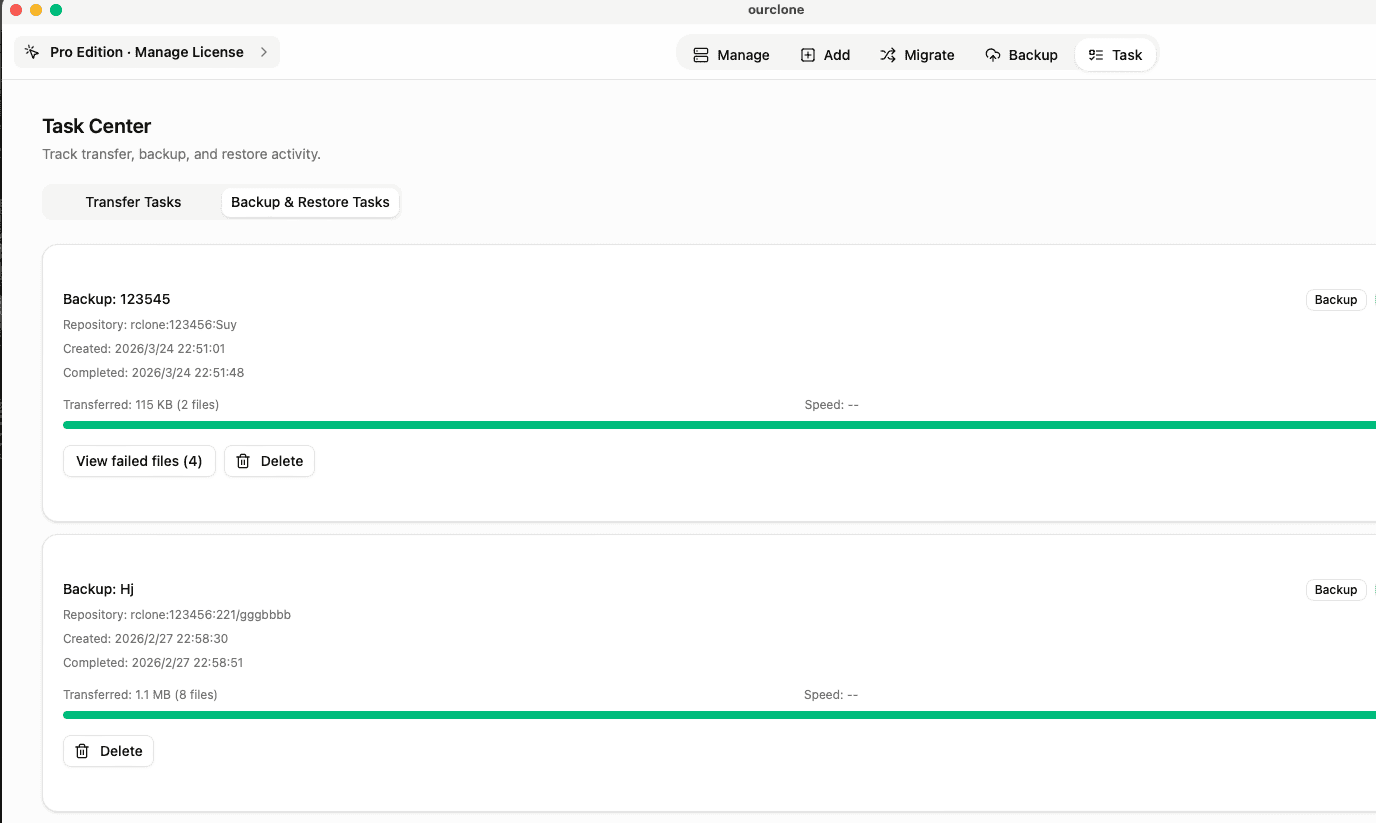
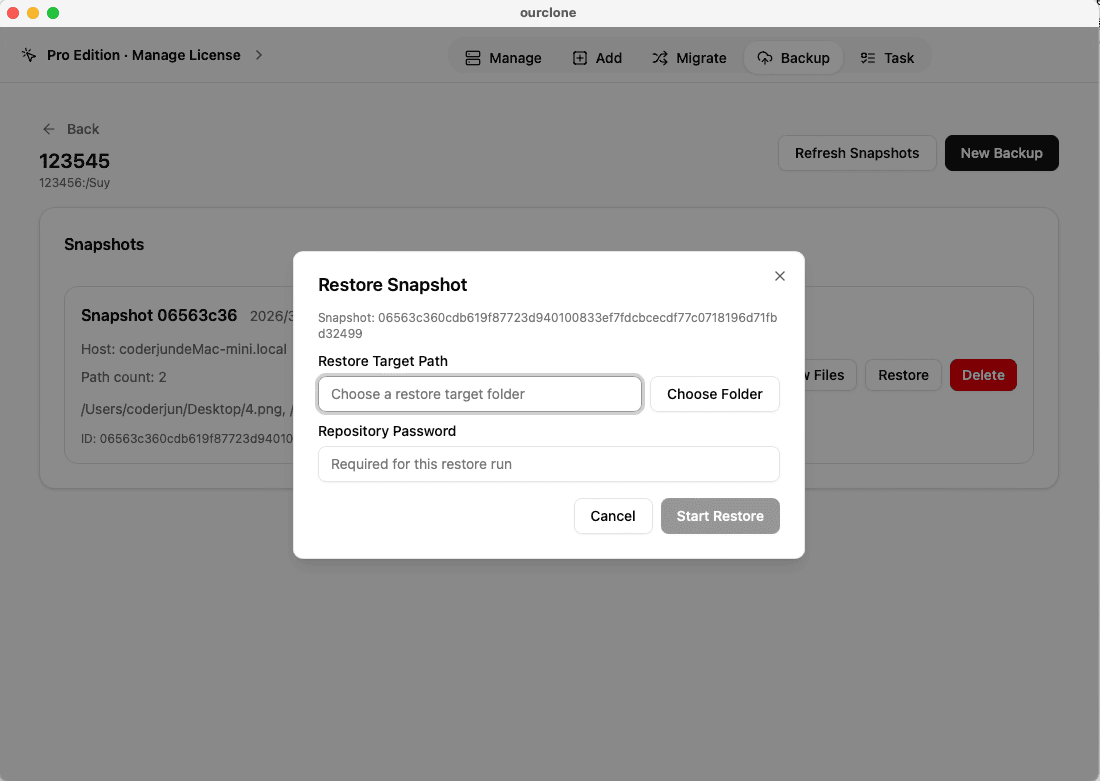
Tasktab to monitor your upload status. OurClone breaks files into blocks and uploads them efficiently -- even large backups can be paused and resumed without losing progress. - 🔄 Restore When Needed -- To recover data, open your repository, select a backup version, and click
Restore. After entering your encryption password, you can restore files to their original location or a new folder -- your directory structure stays intact.

OpenDrive gives you an easy-to-understand cloud storage plan, and OurClone turns it into a practical Mac backup workflow with encryption, incremental snapshots, and simple restores. The result feels much more dependable than depending on sync behavior alone.
How to Confirm Your Backup in OurClone
When the first backup finishes, verify it before you trust it. A quick check makes sure your OpenDrive backup is genuinely recoverable and not just apparently complete.
- 📄 Check Task Completion -- Review the latest backup task in the
Tasksection. If it completed cleanly, you are in good shape. If uploads failed, OurClone will show the details clearly. - 🧩 Look for Partial Results -- Locked files, account credential changes, or source-path issues can lead to skipped items. Catching those now is much easier than discovering them during a restore.
- 📜 Read the Detailed Logs -- Open the task log to confirm which files were included, how much data moved, and whether the repository updated the way you expected.
- 🔐 Protect Your Restore Path -- OpenDrive storing the backup data is only part of the story. You still need the repository password to decrypt and restore those files later.
Regularly Check That Backups Are Still Running
Scheduled jobs still deserve occasional attention. Password changes, account issues, or moved source folders can interrupt future OpenDrive uploads even if the repository itself still exists.
Test a Restore Before You Need One
Restore one smaller folder to a temporary location and open a few files. That confirms your OpenDrive access, your repository password, and the integrity of your backup snapshots before a real recovery becomes urgent.