Why Backing Up Your macOS Folders to Backblaze B2 Is a Smart Move
Traditional sync apps are convenient, but they are not always the best fit for serious backup. If your goal is durable offsite protection, object storage often gives you better cost control and more flexibility. That is why many technical users choose Backblaze B2 as the storage layer behind a real backup workflow.
- 🔐 Key-Based Access Control -- Backblaze B2 uses an application key ID and application key model, which is ideal if you want to separate backup access from your main account credentials.
- 💸 Predictable Pricing -- Backblaze B2 starts at $6 per TB per month, includes the first 10 GB free, and avoids minimum storage duration fees that can complicate backup costs.
- 💻 Works Well From macOS Through OurClone -- Because B2 is S3-compatible, your Mac can use it cleanly as an encrypted remote repository without needing a native Finder sync client.
- 📦 Built for Backup and Recovery -- Backblaze positions B2 for backup, recovery, and active archive workloads, which makes it a natural match for long-term Mac protection.
- 🌍 Accessible Anywhere -- Files stored in B2 can be downloaded later through compatible tools or the web console, making offsite recovery practical when your original Mac is unavailable.
What Is Incremental Backup and Why Does It Matter?
Full backups are important for the first run, but repeating full uploads every time is one of the fastest ways to waste storage, bandwidth, and patience.
Incremental backup avoids that by uploading only changed content after the initial snapshot. If you edit a few files inside a large working folder, you do not need to send the unchanged data again.
OurClone uses this model with Backblaze B2, which is especially useful for large media projects, source code archives, or external-drive backups. You get the durability of object storage without paying the time penalty of repetitive full uploads.
- 🚀 Speeds up backup times by only syncing changed files
- 💾 Saves cloud storage space and bandwidth usage
- 🔐 Works with encrypted storage like Backblaze B2 for secure updates
- 📅 Allows versioning so you can access past edits when needed
What to Know Before You Start Backing Up
Object storage is powerful, but it works best when you set it up deliberately from the start.
- 📁 Pick the Right Folders -- Focus on valuable user data like
~/Documents, client projects, and photo libraries. Skip caches, app bundles, and macOS system folders that can be recreated later. - 📶 Make Sure Your Internet Can Handle It -- The first upload to Backblaze B2 may be large, so a stable connection is critical. Incremental runs get much easier after the first snapshot.
- 🔒 Don't Forget Security -- Create a dedicated B2 application key for backups instead of using broader account access, and protect your OurClone repository password carefully.
- 🧪 Start Small -- Test with a small folder and a dedicated bucket path first. It is the fastest way to verify your keys, destination, and restore flow.
- 📦 Know Your Backup Strategy -- Create one repository, keep snapshots organized, and remember that your first snapshot is full while later snapshots are incremental.
How to Back Up macOS Folders to Backblaze B2 Using OurClone
Backblaze B2 connects to OurClone using S3-style credentials. Before you start, create a bucket in your Backblaze account and generate the application key ID and application key you'll use for backup access.
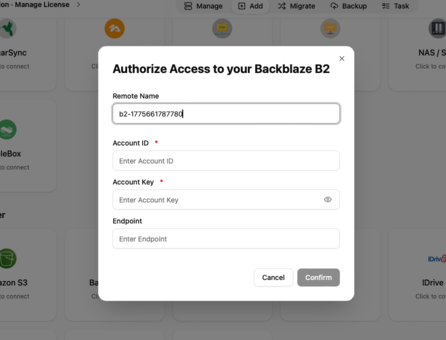
- 🔐 Connect to Backblaze B2 via Access Keys -- Open OurClone and go to
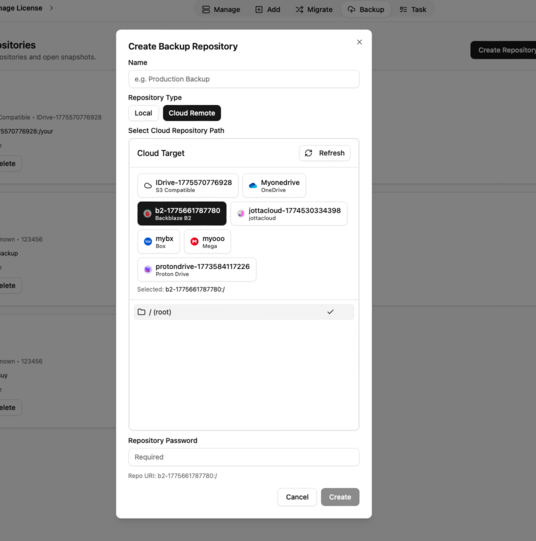
Add Storage. Select Backblaze B2. You'll need your Account ID and Account Key, which you can create from the Backblaze B2 console underApp Keys. Enter the credentials and the correct bucket or S3-compatible endpoint details if prompted. Once verified, Backblaze B2 will appear as a connected storage backend. - 🗄️ Create a Backup Repository -- Go to the
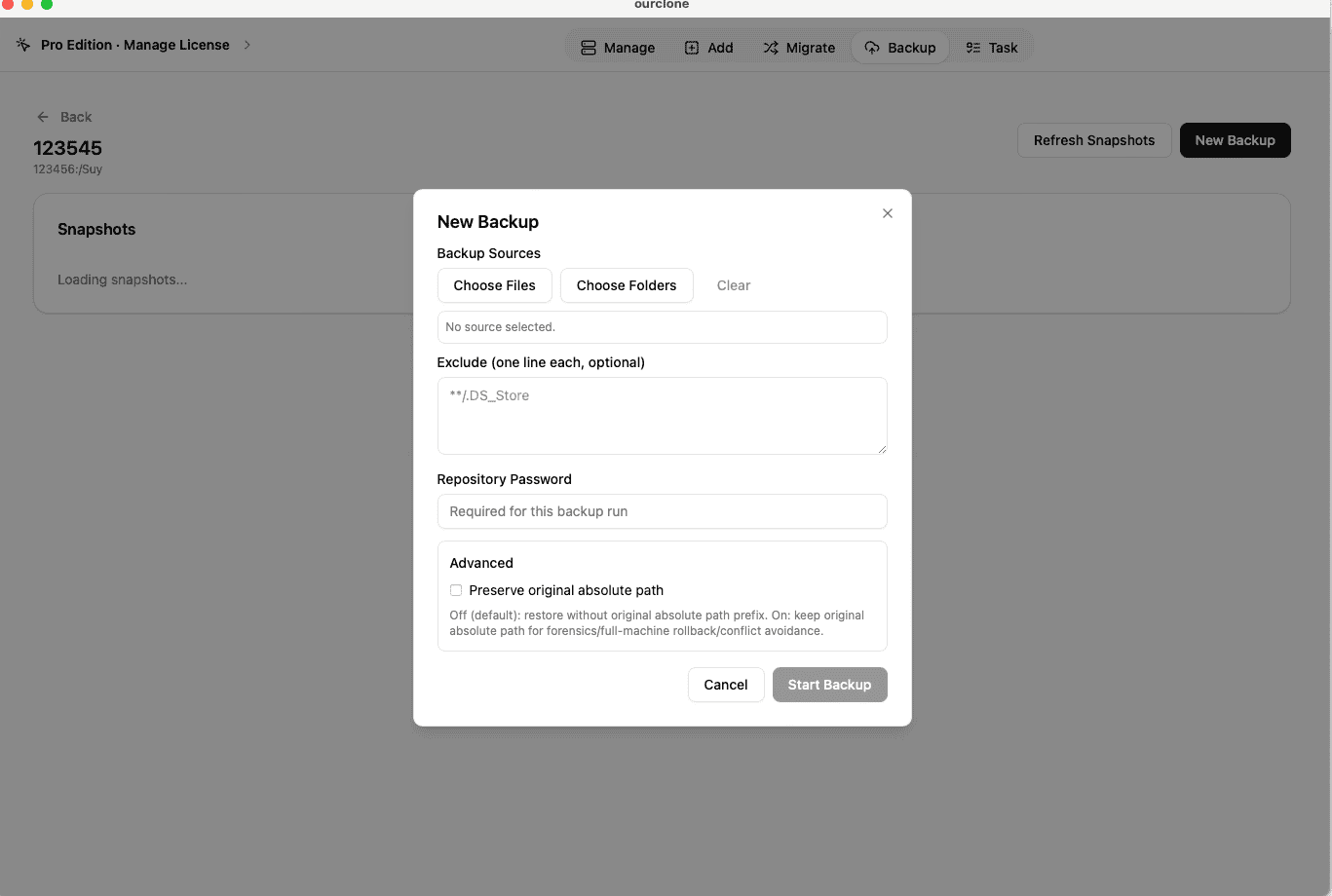
Backuptab and clickCreate Repository. Choose a destination path on Backblaze B2 like/macos-backup. Set a repository name and define your encryption password. This password is required to restore your files -- keep it safe. - 📁 Select Folders to Back Up -- Once your repository is ready, click
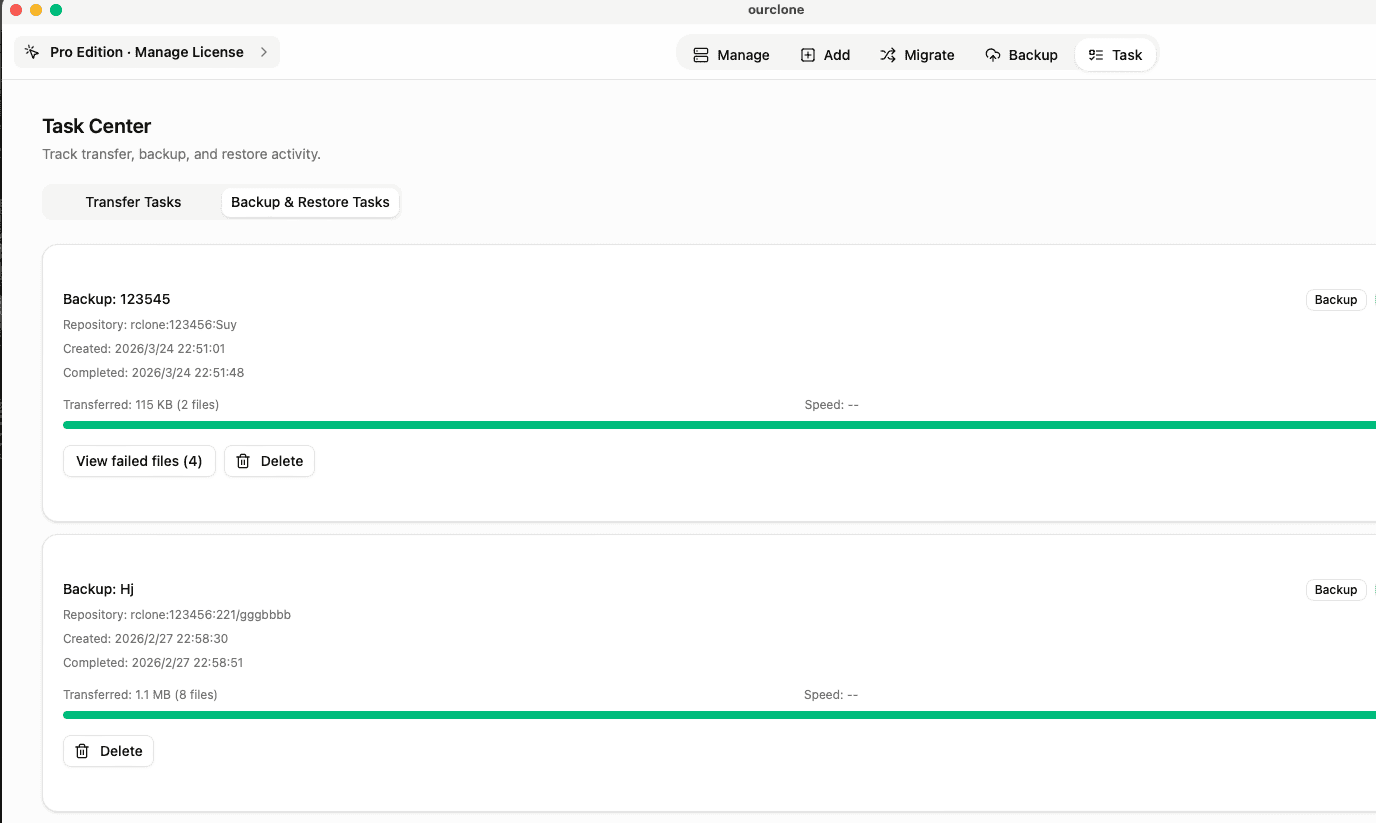
New Backupand select the local folders you want to protect. Whether it's~/Documents,~/Pictures, or folders on an external disk, OurClone will encrypt and send them securely to Backblaze B2. - 📊 Track Backup Progress in Real Time -- Head over to the
Tasktab to monitor your upload status. OurClone breaks files into blocks and uploads them efficiently -- even large backups can be paused and resumed without losing progress. - 🔄 Restore When Needed -- To recover data, open your repository, select a backup version, and click
Restore. After entering your encryption password, you can restore files to their original location or a new folder -- your directory structure stays intact.
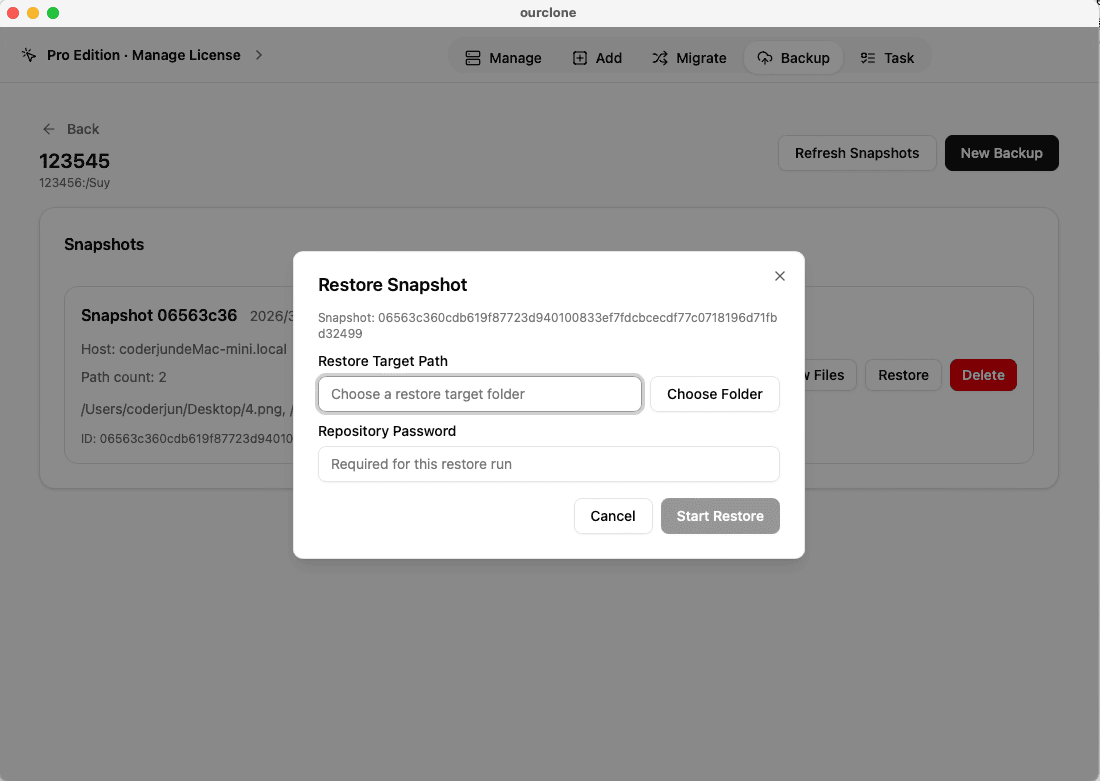
With Backblaze B2 as the storage layer and OurClone handling encryption plus incremental snapshots, you get a practical offsite backup setup without depending on a consumer sync folder.
How to Confirm Your Backup in OurClone
Finishing the upload is only step one. You also want to confirm that the repository is readable and ready for a real restore later.
- 📄 Check Task Completion -- Go to the
Tasksection and look underBackup Task. If the status shows completed without warnings, you're good. Errors or failed uploads will be flagged clearly. - 🧩 Review File Results -- If files were skipped (locked permissions, access errors), you'll see a notice in the task logs for immediate troubleshooting.
- 📜 Use the Detailed Logs -- Click into any backup task to view its full log with file paths, sizes, and upload status.
- 🔐 Encrypted Repository Checks -- OurClone encrypts all backup data before uploading. Verification ensures each encrypted block is stored properly and linked to the correct backup record.
Regularly Check That Backups Are Still Running
S3-compatible backups can fail later if keys are rotated, bucket permissions change, or the target path is removed. Review your scheduled tasks occasionally so credential issues do not go unnoticed for months.
Test a Restore -- Even If You Don't Need One Yet
Restore a small folder to a temporary location and open a few files. This confirms your Backblaze B2 credentials, your repository password, and the integrity of your snapshots before you rely on them during a real emergency.