Why Backing Up Your macOS Folders to Azure Blob Storage Is a Smart Move
If you want cloud backup that scales well beyond a typical sync folder, Azure Blob Storage is built for exactly that kind of workload. It gives you object storage with multiple access tiers and redundancy options, while OurClone adds the encrypted repository, incremental snapshot flow, and restore experience that make Azure Blob Storage much easier to use for day-to-day Mac backup.
- 🔐 Encryption and Security Controls -- Microsoft documents that Azure encrypts data at rest by default, and it also supports customer-managed keys for teams that need more control. OurClone adds its own repository encryption before upload, so your backup content stays protected end to end.
- 💸 Flexible Cost Model -- Azure Blob Storage uses pay-as-you-go pricing based on region, redundancy, access tier, operations, and bandwidth. It also supports hot, cool, cold, and archive tiers, so you can tune cost around how often your backup data actually needs to be restored.
- 💻 Strong Fit for Mac Backup Workflows -- Azure Blob Storage is not tied to a Finder-first sync experience. With OurClone, you can back up any macOS folder you choose, including creative projects, team archives, and content stored on external drives.
- 📦 Tiering and Retention Flexibility -- Azure supports hot, cool, cold, and archive tiers for blob data, which makes it useful whether you need frequent access, lower-cost disaster recovery, or longer-term retention.
- 🌍 Redundancy and Recovery Options -- Azure Storage supports redundancy models such as LRS, ZRS, GRS, and related variants. That gives you a range of options depending on whether you care most about cost, zone resilience, or regional disaster recovery.
What Is Incremental Backup and Why Does It Matter?
Running a full backup every time is rarely practical once your Mac starts holding serious data. Media libraries, development folders, and design assets can quickly turn repeated full uploads into wasted hours.
Incremental backup avoids that problem by sending only new or changed data after the first snapshot. Instead of re-uploading everything to Azure Blob Storage, you keep later runs much leaner while still building a useful restore history.
OurClone supports incremental backups to Azure Blob Storage, which makes this setup realistic for regular use. Azure gives you the scalable object storage layer, and OurClone keeps the backup process efficient enough to run on an ongoing basis from macOS.
- 🚀 Speeds up backup times by only syncing changed files
- 💾 Saves cloud storage space and bandwidth usage
- 🔐 Works with encrypted storage like Azure Blob Storage for secure updates
- 📅 Allows versioning so you can access past edits when needed
What to Know Before You Start Backing Up
A little prep will make your Azure Blob Storage backup cleaner to manage and easier to restore later.
- 📁 Pick the Right Folders -- Choose folders that would actually hurt to lose, such as
~/Documents,~/Pictures, source code, or client work. Leave out macOS system files, caches, and other folders that are better recreated than backed up. - 📶 Make Sure Your Internet Can Handle It -- The initial upload to Azure Blob Storage may be large, so a stable connection matters most at the start. Later incremental uploads are usually much lighter.
- 🔒 Don't Forget Security -- If you use account access keys or a SAS-style workflow, protect those credentials carefully and rotate them when appropriate. Store your OurClone repository password separately, because you will need it for restores.
- 🧪 Start Small -- Test with one smaller folder first so you can confirm the storage account, container path, credential method, and restore flow before you commit a full archive.
- 📦 Know Your Backup Strategy -- The first snapshot is a full upload, while future snapshots are incremental. That gives you a sensible balance between complete protection and manageable recurring backup time.
How to Back Up macOS Folders to Azure Blob Storage Using OurClone
OurClone keeps the process straightforward. Azure Blob Storage typically uses storage account credentials or a related access method, so you'll prepare those in Azure first and then connect the storage target inside the app.
- 🔐 Connect to Azure Blob Storage with Storage Credentials -- Open OurClone and go to
Add Storage. Select Azure Blob Storage. You'll usually need the storage account name plus an account access key or other approved credential from the Azure Storage authorization docs and Azure portal. Once entered, OurClone will verify your credentials and Azure Blob Storage will appear as a connected storage backend. - 🗄️ Create a Backup Repository -- Go to the
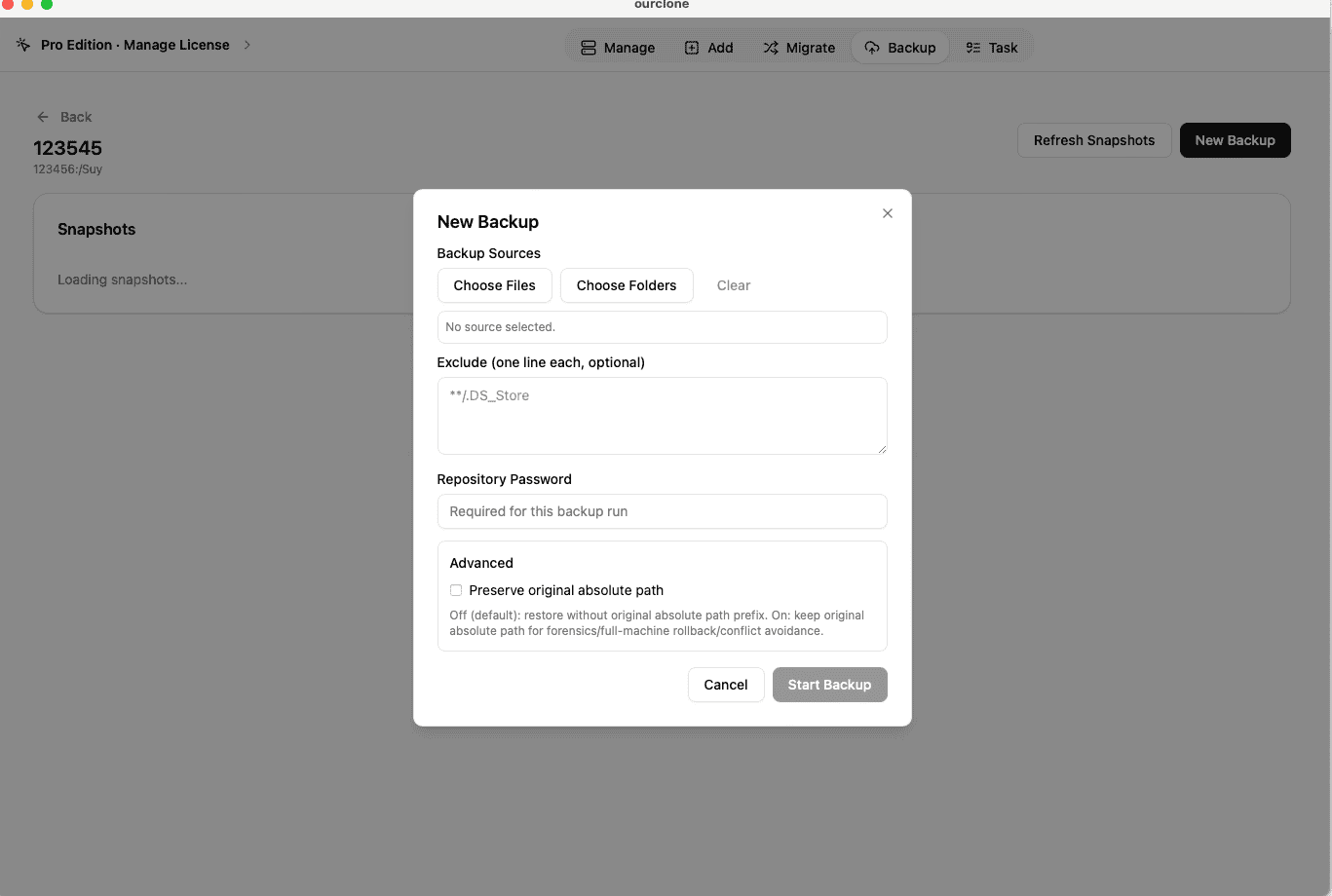
Backuptab and clickCreate Repository. Choose a destination path on Azure Blob Storage like/macos-backup. Set a repository name and define your encryption password. This password is required to restore your files -- keep it safe. - 📁 Select Folders to Back Up -- Once your repository is ready, click
New Backupand select the local folders you want to protect. Whether it's~/Documents,~/Pictures, or folders on an external disk, OurClone will encrypt and send them securely to Azure Blob Storage. - 📊 Track Backup Progress in Real Time -- Head over to the
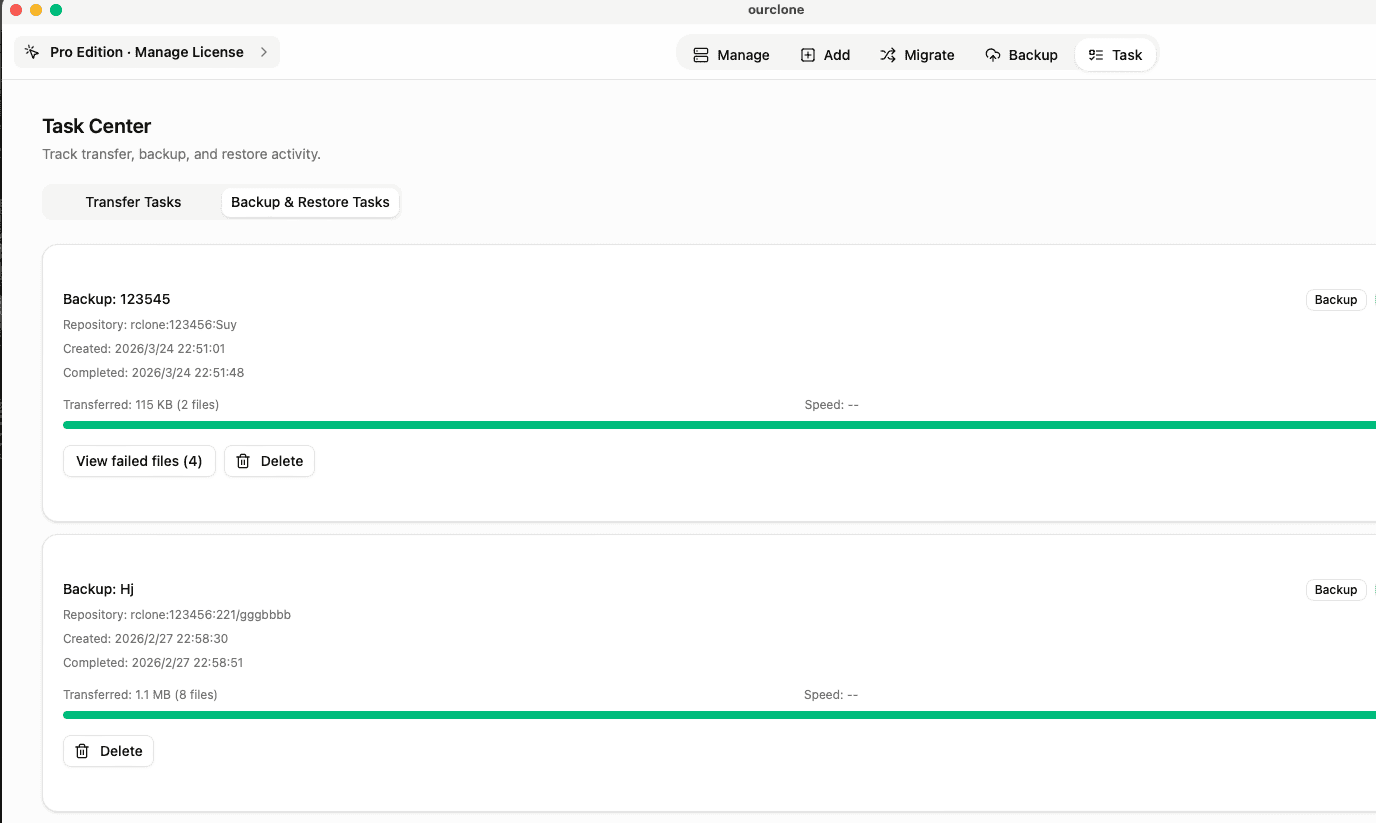
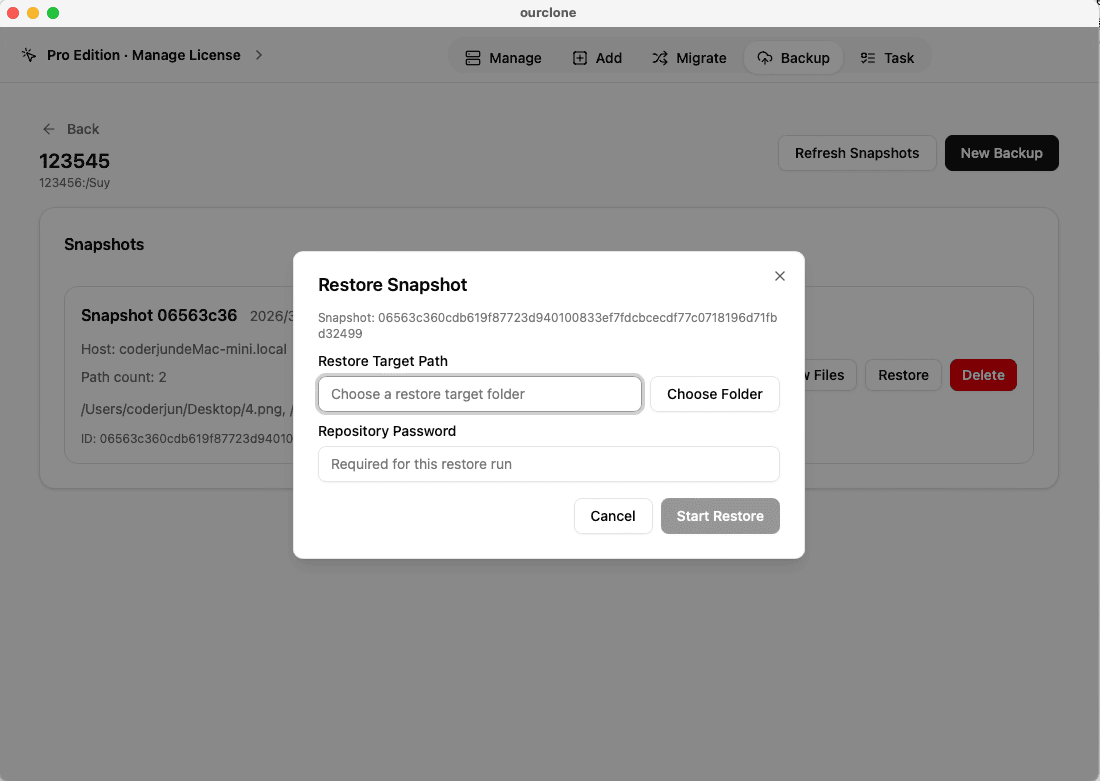
Tasktab to monitor your upload status. OurClone breaks files into blocks and uploads them efficiently -- even large backups can be paused and resumed without losing progress. - 🔄 Restore When Needed -- To recover data, open your repository, select a backup version, and click
Restore. After entering your encryption password, you can restore files to their original location or a new folder -- your directory structure stays intact.
Azure Blob Storage provides the scalable object storage layer, and OurClone provides the encrypted backup experience that makes it practical for everyday Mac protection. Together, they give you a backup setup that can grow from a few folders to much larger archives without changing the basic workflow.
How to Confirm Your Backup in OurClone
When the first backup finishes, verify it before you trust it. A quick validation step makes sure your Azure Blob Storage backup is ready for recovery, not just upload.
- 📄 Check Task Completion -- Review the latest backup task in the
Tasksection. If it completed without warnings, that is a good sign. If uploads failed, OurClone will surface that clearly. - 🧩 Look for Partial Results -- Locked files, missing permissions, or changed source paths can lead to skipped items. Checking the task details now is much easier than learning about gaps during an urgent restore.
- 📜 Read the Detailed Logs -- Open the task log to confirm which files were included, how much data moved, and whether the repository updated the way you expected.
- 🔐 Protect Your Restore Path -- Azure Blob Storage holding your data is only half the story. Make sure the repository password is still accessible, because that is what allows OurClone to decrypt and restore the backup later.
Regularly Check That Backups Are Still Running
Automated jobs still deserve occasional attention. Credential changes, SAS expiration, access policy changes, or storage account updates can interrupt Azure Blob Storage uploads even if the repository itself still exists.
Test a Restore Before You Need One
Restore one smaller folder to a temporary location and open a few files. That confirms your Azure Blob Storage access, your repository password, and the integrity of your backup history before a real recovery becomes urgent.